Posts in Category: travel
Helsinki
With the passage (more or less) of covid, the college is picking up initiatives that had to be put on hold due to lockdowns. One of the yawning needs of our programs is greater opportunities for study abroad programming. Always an interest to students in our majors, it’s also a huge part of the Belmont ethos. I was delighted to have this reason to travel to Finland, which has long been on my list of hoped-for destinations (along with all the other Nordic countries).
As anticipated, it was great, but for bonus reasons in addition to what I expected. Interesting to learn that Helsinki is both the smallest and most modern of European capitals–it has about 660,000 people and a land area of 82.53 mi² (compare with London at 607 mi²). Named the capital of Finland in 1812, it has no reason to have a medieval core.
Finland has always exceeded expectations in terms of impact on the design world, with major modern players (Eero Saarinen, Aino & Alvar Aalto, Armi Ratia, Maija Isola, Wivi Lönn, Lars Sonck) emerging from long traditions of nature-bound, quality craft spanning millennia. The land of Marimekko & Moonin, the Aalto vase & Princess Leia’s necklace , as well as Metropolia’s “Creative Campus,” I am thrilled to have established a partnership with Metropolia for our fashion & interior design students, and am just a skosh jealous of them.
 Helsinki
 Helsinki
 Helsinki
 bat!
 Metropolia: Arabia campus
 Metropolia: Arabia campus
 Saarinen
 Saarinen
 Sonck
 Sonck
 Saarinen
 Helsinki
 nicest airport in the world
exhibition: Eesti Arhitektuurimuuseum (Estonian Museum of Architecture), Tallinn
 housed in a fabulous salt storage built in 1908

 cellar


 Cemetery chapel (Herbert Johanson, 1935), described as "limestone functionalism"
 "House of Play" (Architect Must, 2014): kindergarten built around the idea of play as the primary way to learn
 Post-Modern Estonia: Western posture as a radical political statement. "Brother's House" by Veljo Kaasik, 1975, an omage to Venturi
 Roterman quarter, Tallinn: New developments from 2005+
First of all, a great (if small) national architecture museum (then again, Estonia is not large). What it may lack in size, Estonia makes up for in a rugged history that is told skillfully through architectural developments going only far back as the 19th c or so. Maybe with more space they’d dig into the buildings that came of being subject to Sweden and then Russia–not to mention centuries and millennia before that. Subsequent Romantic Nationalism flourished by the time of a brief independence in the 1920s and ’30s, which came to a crashing end by the occupation of the Soviets in 1940 and the Nazis a few years later. Unlike its neighbors Latvia and Lithuania, Estonia shook off Soviet control and recognized its independence in August, 1991–notably, the year that this great little museum was founded.
This very particular history, woven into what is more typically learned of the twentieth century, recasts architectural developments from Modernism to Post-Modernism into a very different context and thus with distinct meaning. The clarity of the exhibitions are skillful in telling Estonia’s fascinating, fraught, and triumphant history through its buildings in a way that I wish we’d see in more capitals.


exhibition: Designmuseo (Helsinki)
 housed in a former school built in former school, designed in 1894 by Gustaf Nyström
 at the ticket counter: display of those famous orange handles
 Vuokko Nurmesniemi exhibition
 Jaakko Iisalo's Angry Birds (2009)
 fiskars everywhere
 Planetary Valleys necklace (a.k.a. Princess Leia's necklace) by Björn Weckström, 1977
 mold for THE Aalto vase
 Vuokko
 Marimekko <3
 Vuokko Oy garden furniture
 Vuokko Oy exhibition
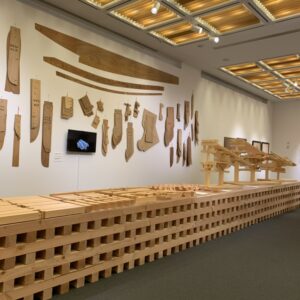
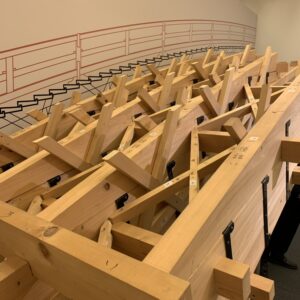
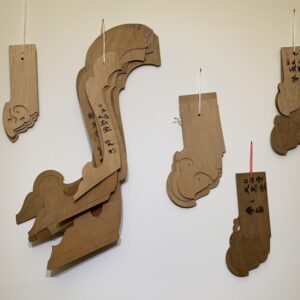
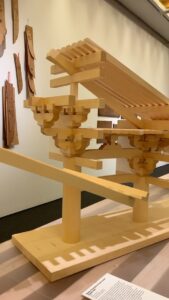
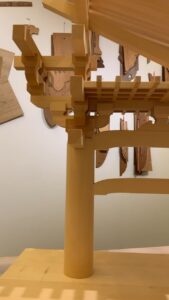
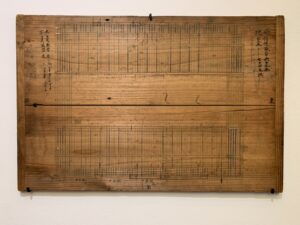
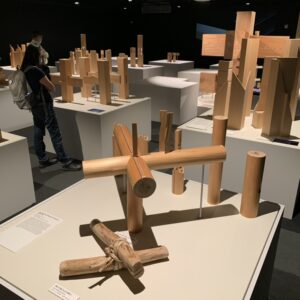
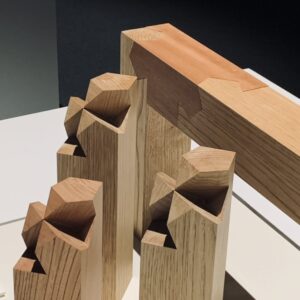
Exhibition: “When Practice Becomes Form: Carpentry Tools from Japan” (Japan Society, New York)
Had the very good fortune to be able to travel to New York at peak exhibition season (then again, when is it not?). First trip to the lovely Japan Society to see a gorgeous & mind-blowing exhibition on the simple, traditional, humble tools of carpenters that have been used for millennia to create the amazing structure and joinery that is at the heart of traditional Japanese architecture. Fantastic collection of actual tools and other construction material, and recent models of bridges, roof structures, and the like. We need more exhibitions like these to remind us of the extraordinary achievements that rely on human hands.


Society of Architectural Historians (2015)
The SAH Annual Meeting is usually an opportunity to travel to, and learn about, a new or at least unfamiliar city; this year, however, it was held in Chicago. Since I have already clocked a lot of miles during this sabbatical, I did not mind the ease of travel at all. If I had the choice, I’d much rather take a train than a plane any day. The tours are typically a highlight of these meetings, and this year was no exception. I took a walking tour of the Pilsen neighborhood, which has changed hands several times (and continues to do so), and a mostly driving tour of Chicago Housing Authority sites. I’m usually not crazy about being trapped on a bus but the format did allow us to cover many miles in the big city, getting a sense of the landscape in a way that my hours of looking at CHA maps has not. We stopped a few times to get a closer look, particularly at the 1938 Jane Addams Homes, last of the ABLA project, and future site of the National Public Housing Museum.
Above: 18th Street stop, Pink Line
